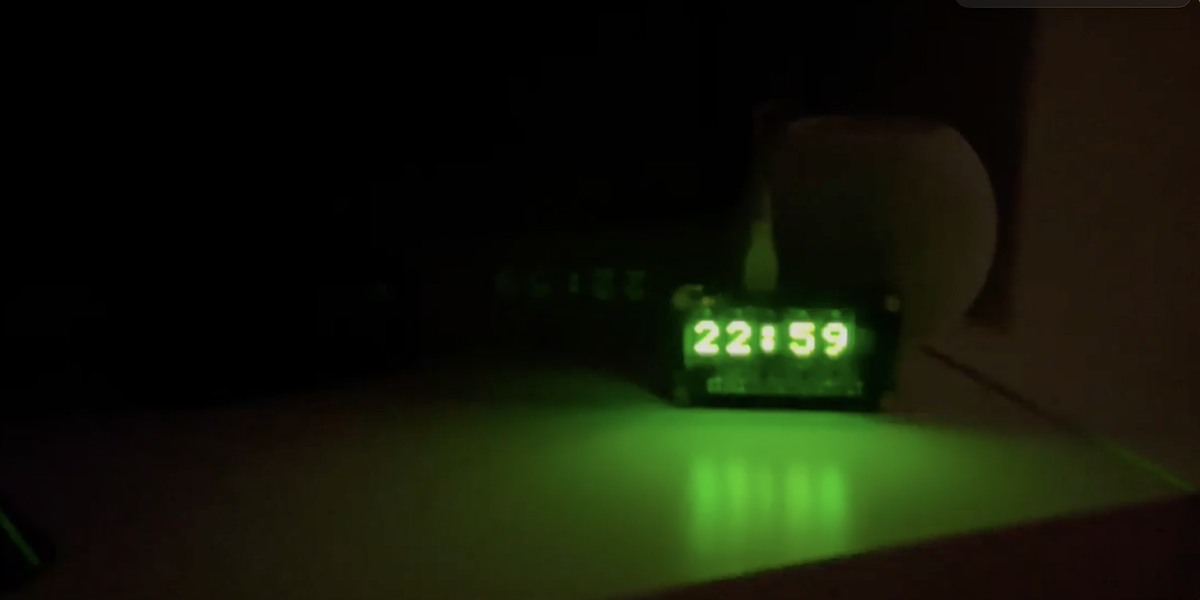
Years ago, I built a digital desk clock using a Pi Zero and a Micro Dot pHAT. Probably an overkill to use a whole computer as a clock, but it has turned out to be very convenient, it’s easy to read day and night, and I like the style.
Lately, it started freezing. No idea why, my guess was the OS needed to be updated, or even better re-installed —I don’t have a clear log of what this Pi Zero has been through all these years, but for sure it was also used as a DNS (pi-hole) at some point, and as a tailscale gateway at some other.
The problem is my clock was a Python script using a library that has not been updated for at least 4 years. Would it work with a much newer version of Pi OS?
It did not. I could not even install it.
So, I cloned it, and used Claude to port it to Zig. I picked Zig because the resulting binaries are small, and I can also cross-compile on my MacBook Pro (waiting for Pi Zero to compile would not be fun). It took me an afternoon, a couple of manual interventions, and I had my Zig port. The examples compiled, and run perfectly on the latest Pi OS (32-bit).
And since I’m not the one writing the code, why not add some flavor? Let’s have the digits scroll up when they change.
Not bad for a project that took an afternoon. I love it how I can make and fix little things that wouldn’t be worth the time and effort without AI-assited coding.