Web3 is focused on L1s, L2s, etc, but often ignores L0: people. But censorship resistance, and resilience in general, does not only come from tech specs. The actual relationships, sometimes mapped using tech, sometimes not, are equally important.

Our personal, social, professional, etc networks are not defined by an app or a protocol, in the same way that our friendships are not defined by the bar where we usually hang out with our friends.

Technology has become an important component of many of our relationships. I've met interesting people on Farcaster, that I wouldn't know how to contact or interact with if Farcaster went away. A good part of my L0 depends too much on an L1. From a purely technical pov, that's wrong.

I'll try to fix it. Follow me on https://x.com/vrypan and https://bsky.app/profile/vrypan.bsky.social, and I'll try to post more there too.
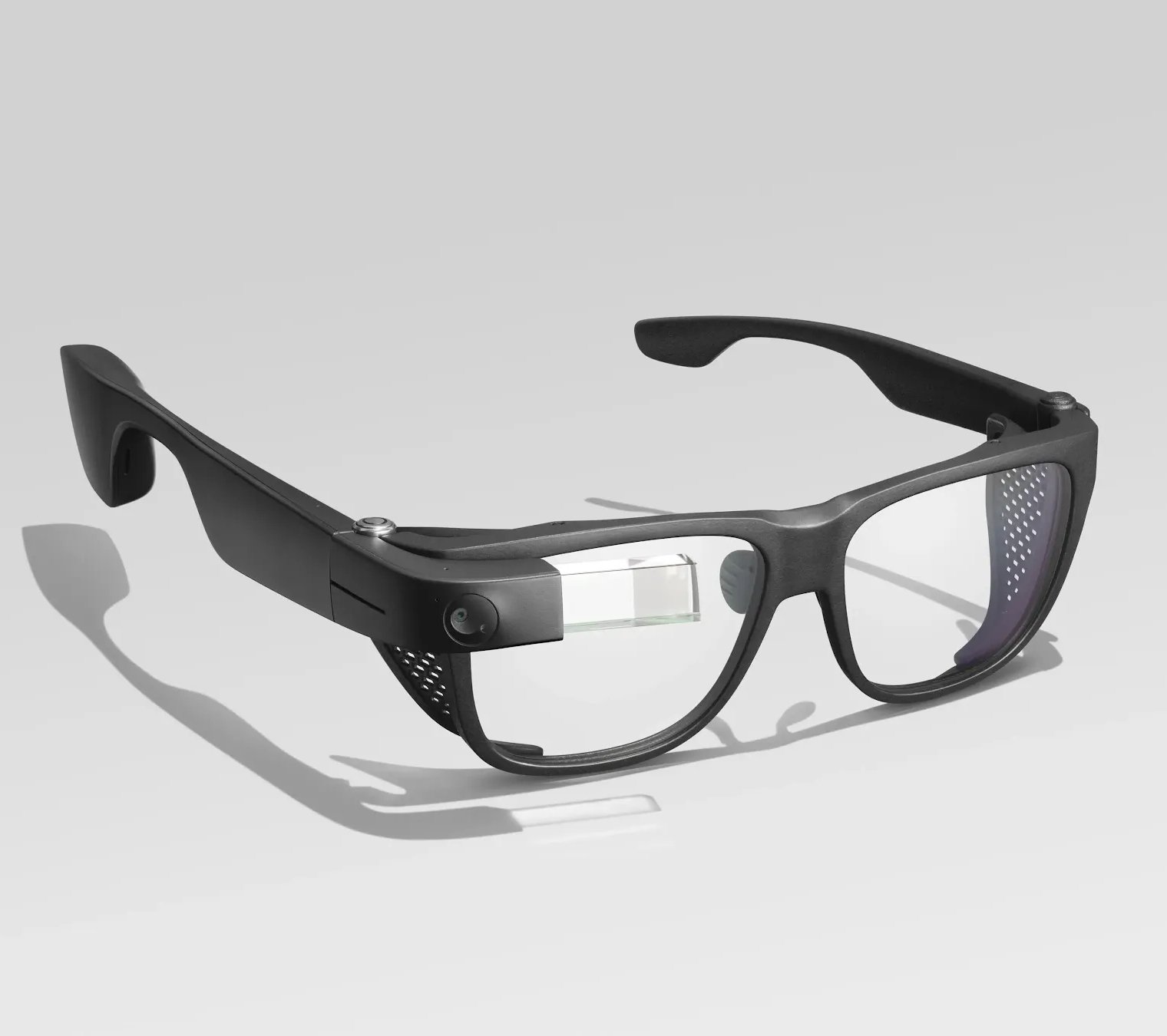
In April 2012, Google announced Google Glass.

The device allowed users to take photos, record videos, send messages, and receive navigation and calendar updates via its heads-up display.

Despite the innovative technology, the device faced significant criticism regarding privacy, driven by the camera's ability to record unnoticed. Social stigma also played a role, as wearing the device was perceived as unusual or intrusive. ๐Ÿค”

https://x.company/projects/glass/ https://en.wikipedia.org/wiki/Google_Glass

Last day of summer for me. It had a couple of unexpected turns, but I had a great time overall.

Looking for a new job, starting tomorrow.

A summer night. I can hear the murmur of the sea. A company of elders are drinking and eating -a can hear them talking and laughing. My daughter is singing while playing the guitar. Cicadas, the soundtrack of Greek summers, sing along.

Here is a walk-through of WDIM.

Keep in mind: WDIM is focused on what your follows share and cast. If you follow 10 accounts, you will probably see nothing. If you follow accounts that cast things you are not interested in, they may be part of what WDIM shows you (though, it does take into account if you interact with a user's casts often).

It has become my favorite way of keeping up with Farcaster.

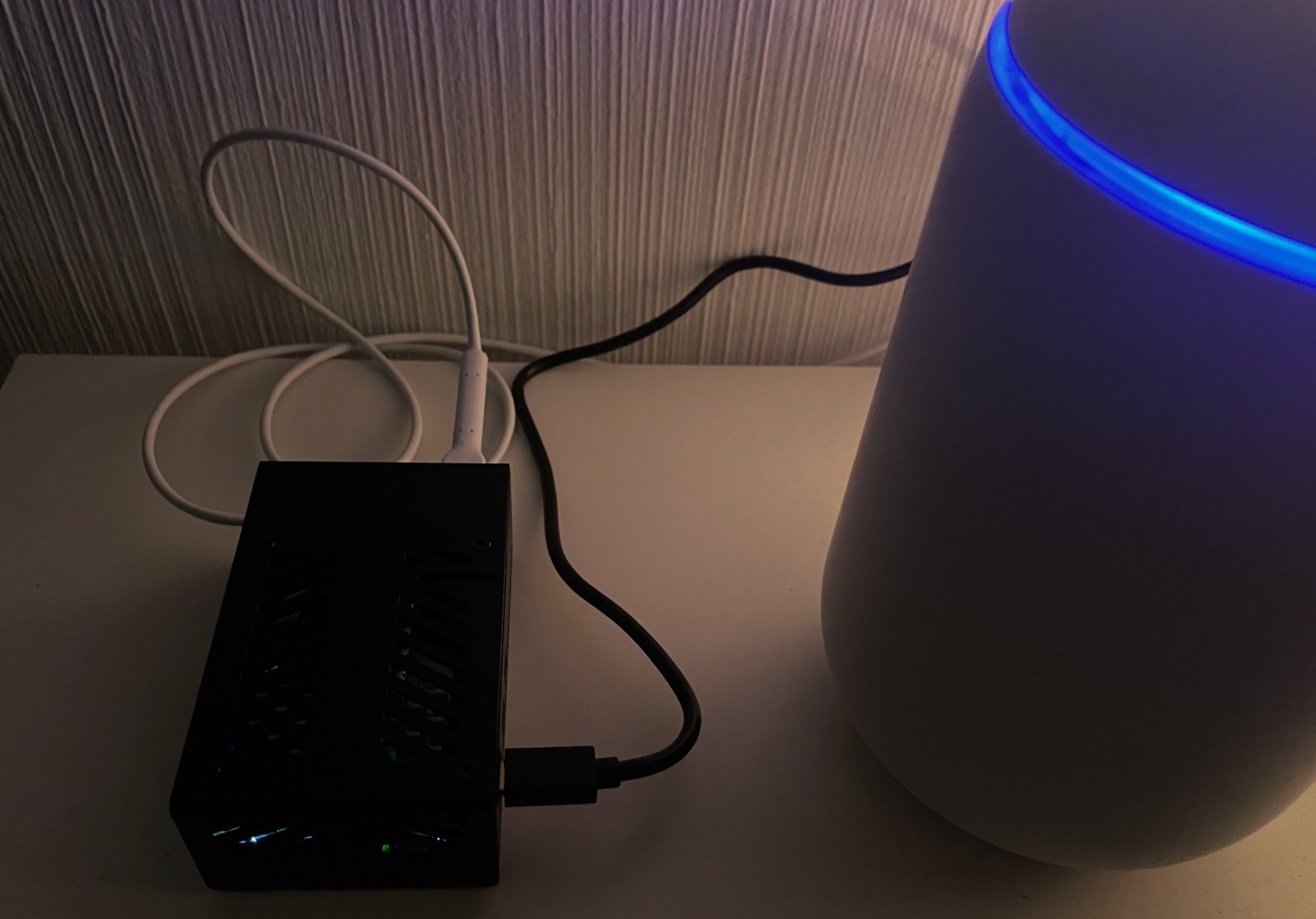
This is one of the best homelab servers I ever had. Not the most powerful, but really silent, very small footprint and it feels so reliable compared to much higher-speced (but same price range) computers I've had in the past.

Really love it. (Runs snapchain like a pro)

  • Raspberry Pi5 16GB
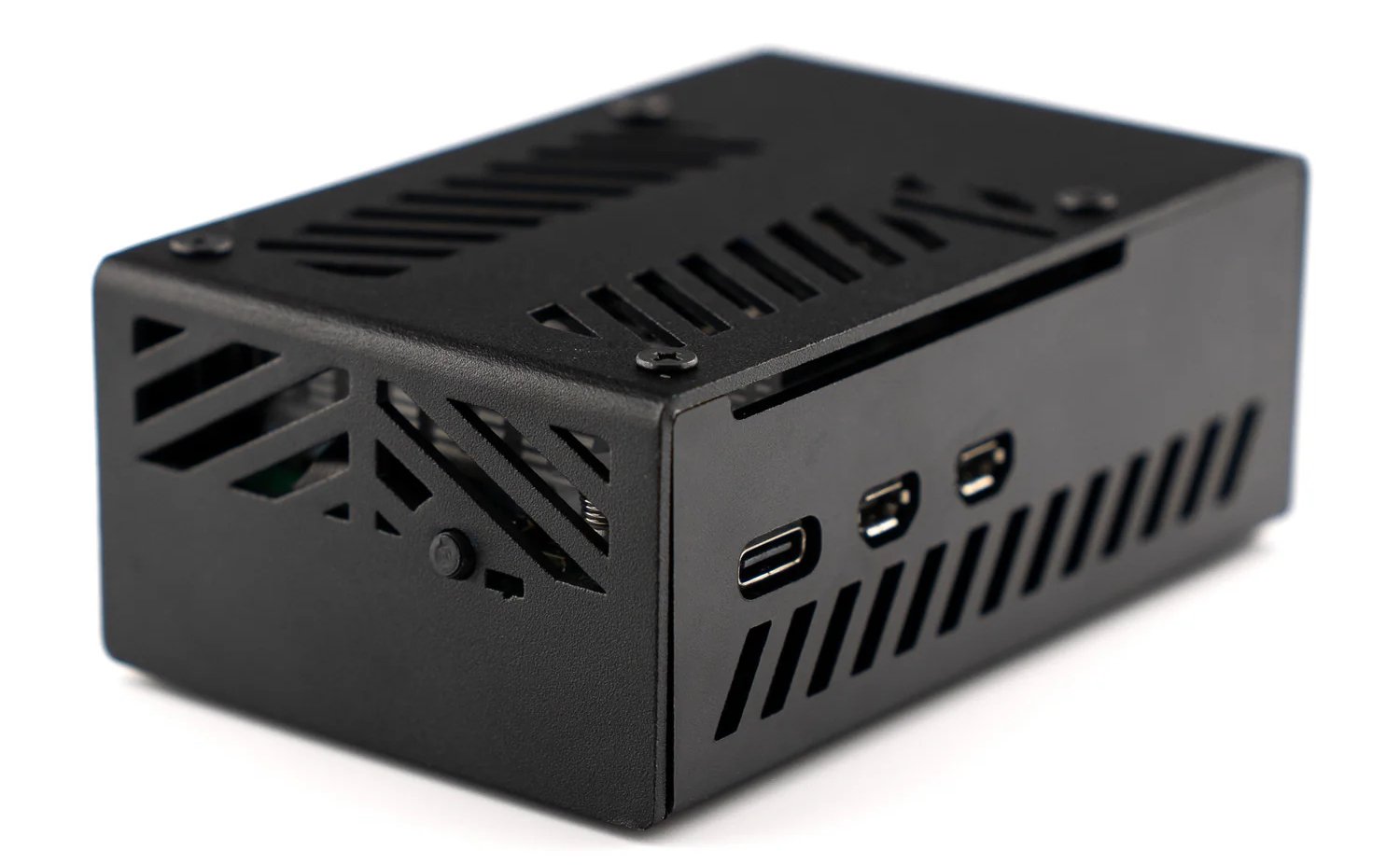
  • NVMe Base Case for Raspberry Pi 5 (pimoroni)
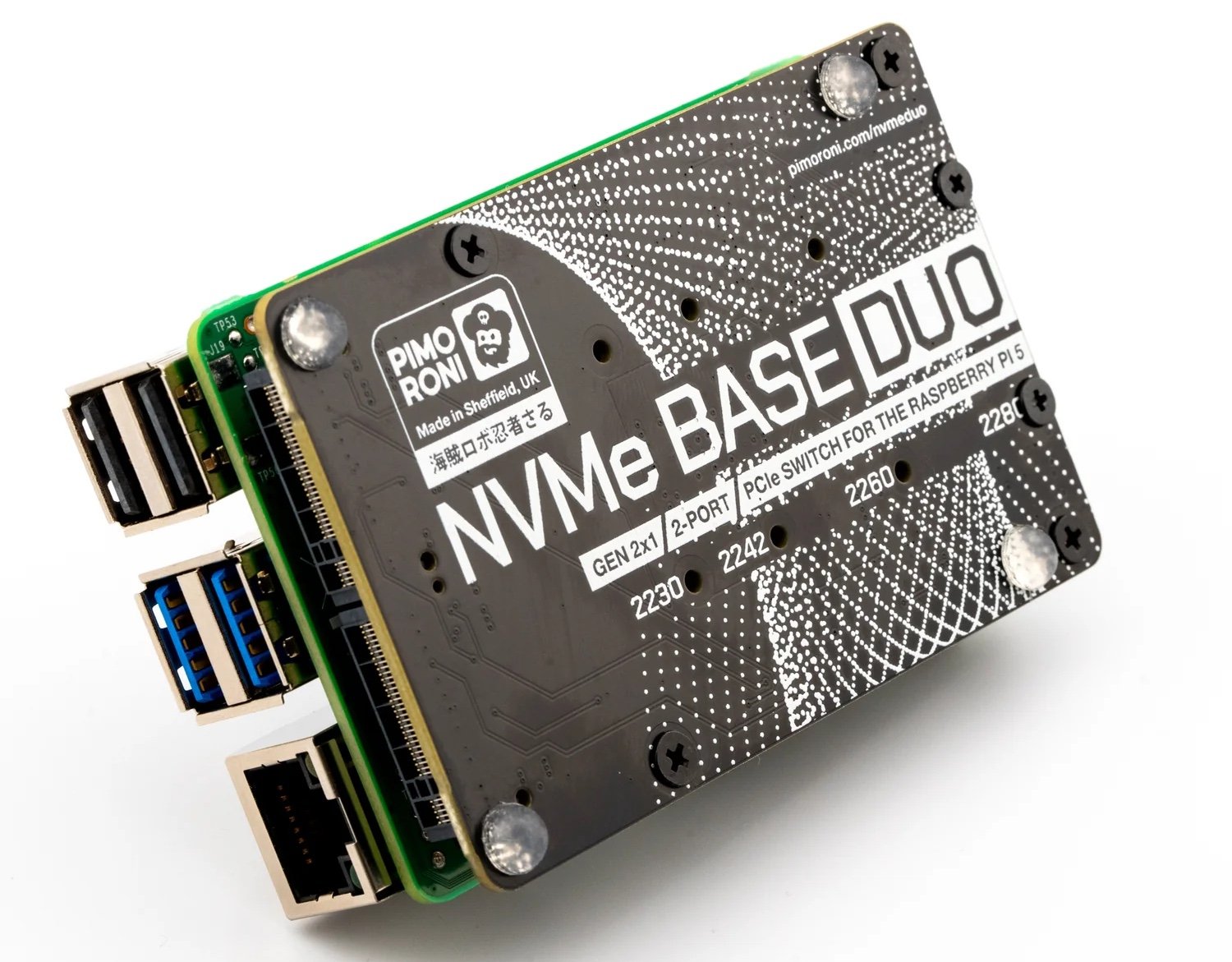
  • NVMe Base Duo for Raspberry Pi 5 - 2x2TB SSD

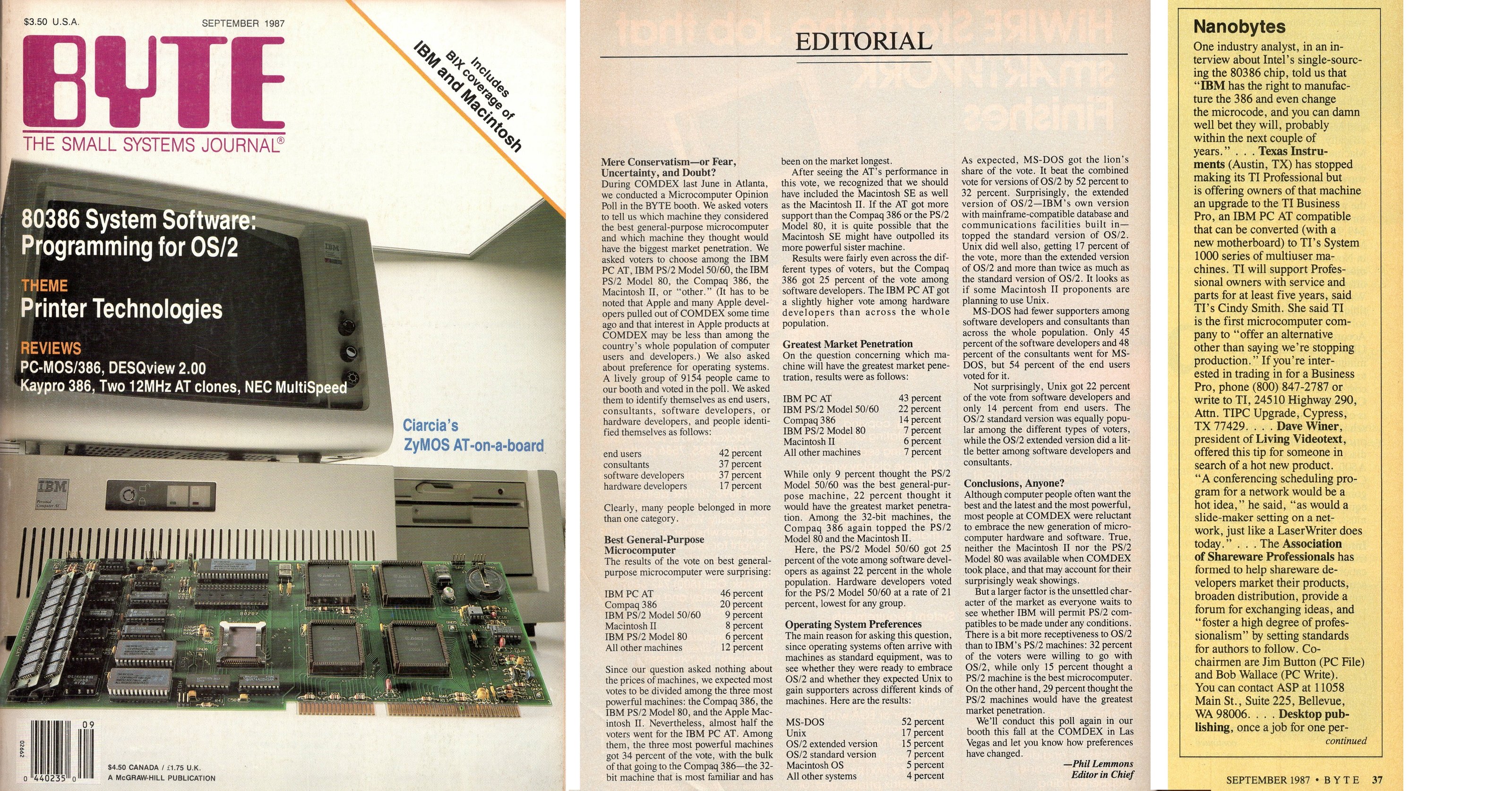
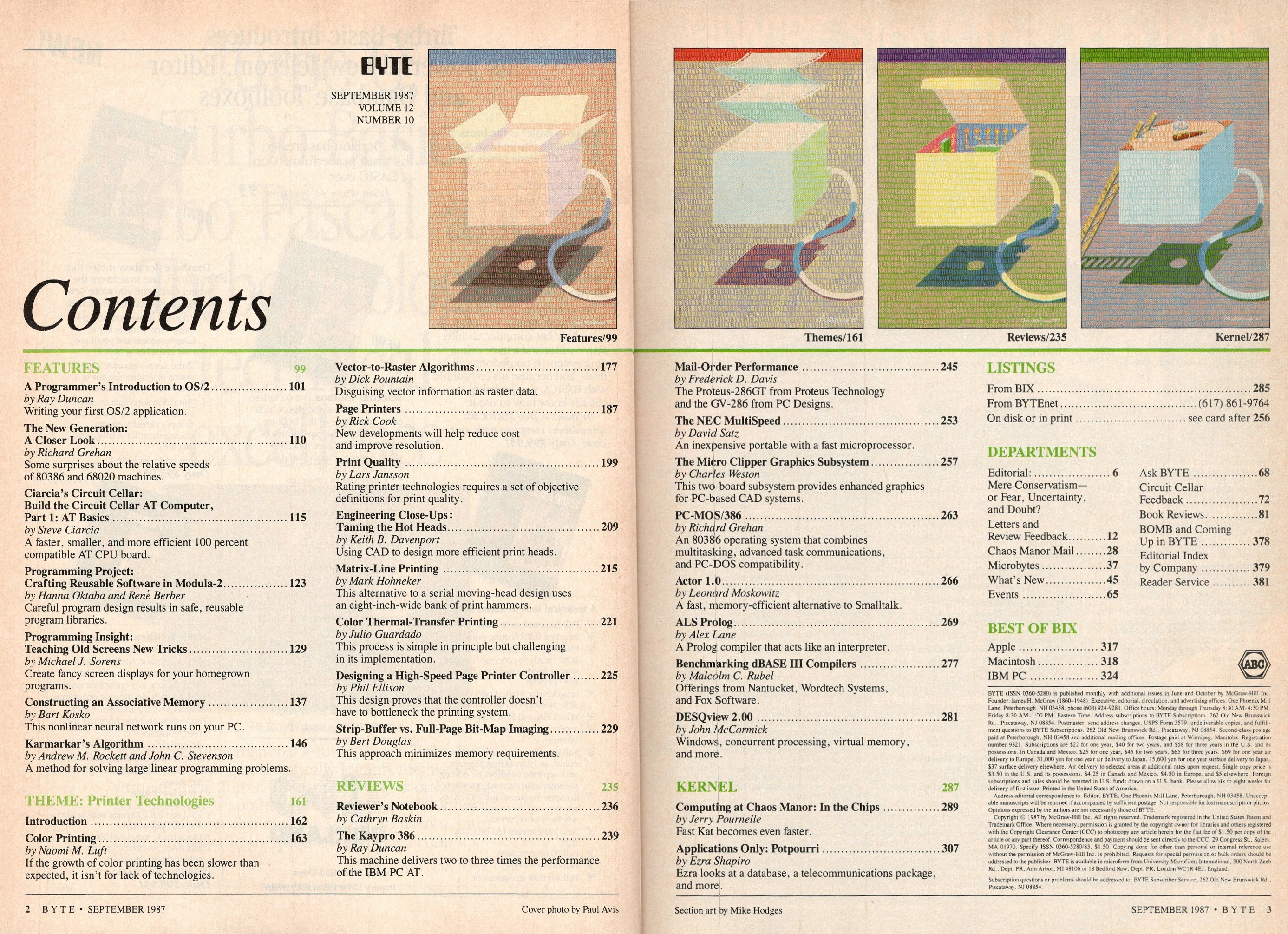
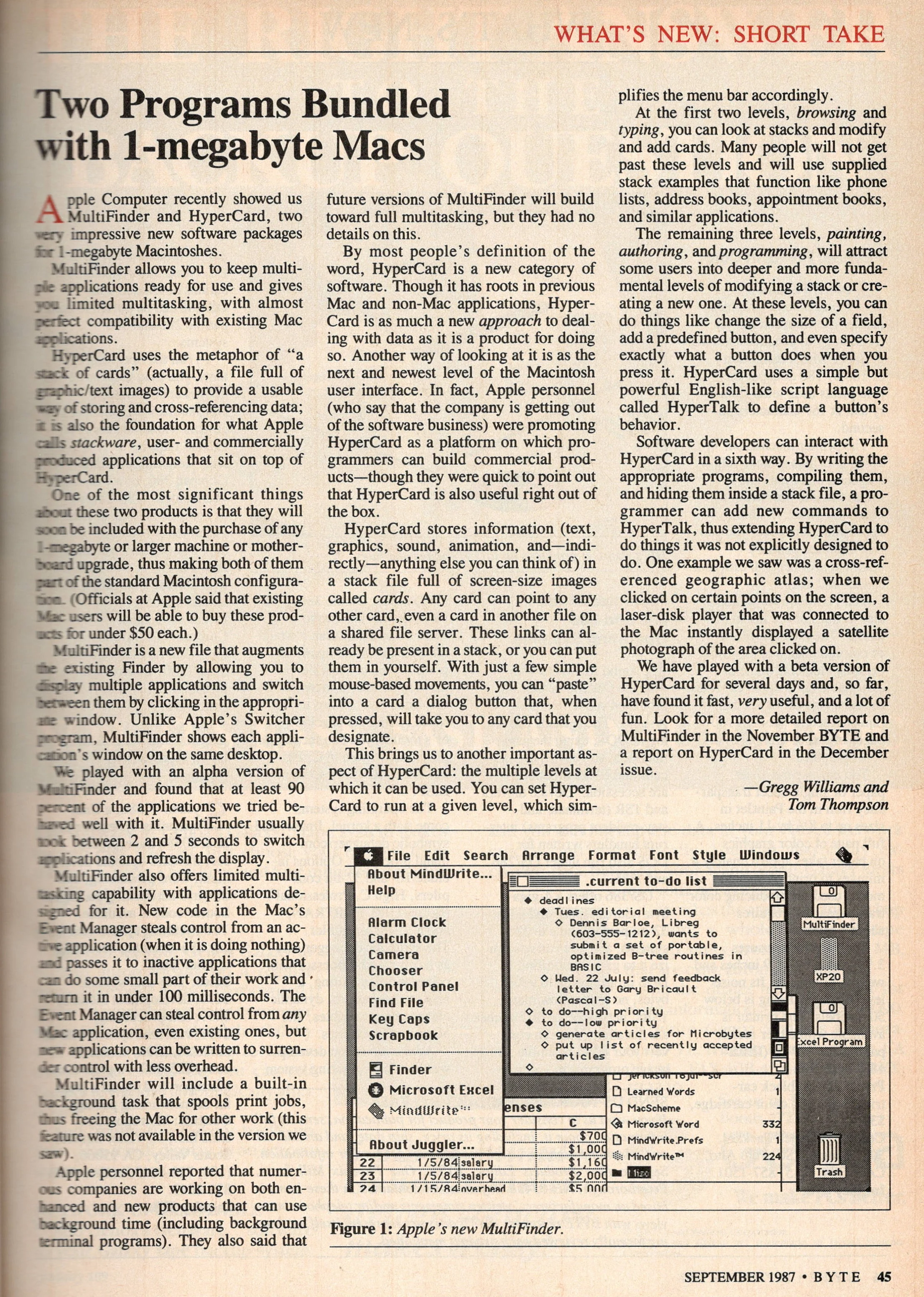
BYTE Magazine, September 1987. IBM's OS/2 is still a hot thing. Remember, this is a time when most PCs are bought by companies, they are still a "business tool" for most users. It's also a time that the industry finds printing technologies a fascinating subject :-)

If you're wondering what PC-MOS/386 was, it was a multi-user, multi-tasking OS that could run DOS programs. Intel's 80386 is almost 2 years old, commercially available at reasonable prices, and its 32-bit architecture, together with the MMU, allowes OS developers to dream multi-user/multi-tasking can come to the PCs.

There is also this preview, about Apple bundling Hypercard with "1-megabyte Macs". Leaving aside that it's 1 MB (not 1 GB...), Hypercard was a revolutionary product that inspired the creation of hypertext, i.e. HTML/HTTP, in other words, the Web.

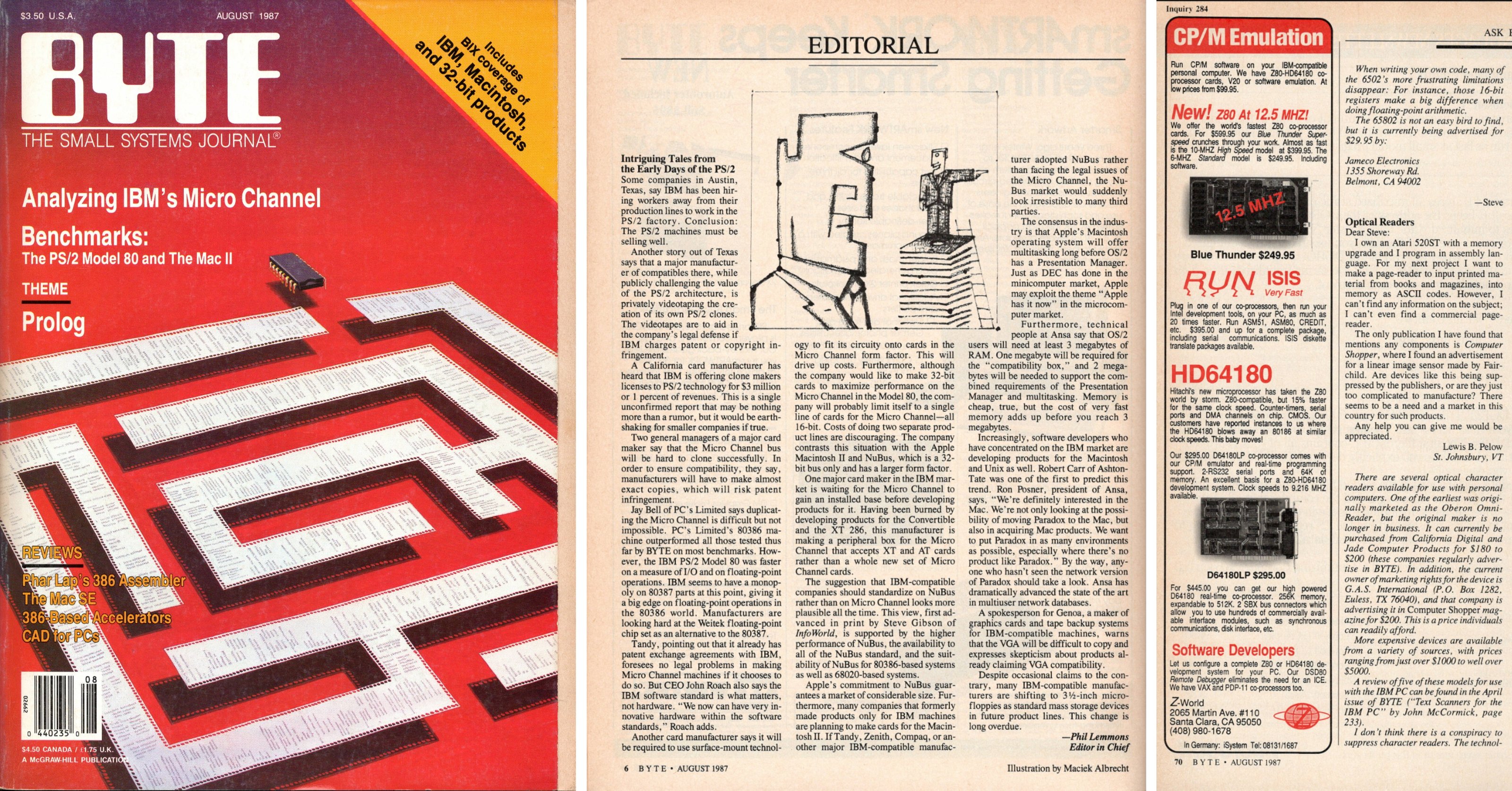
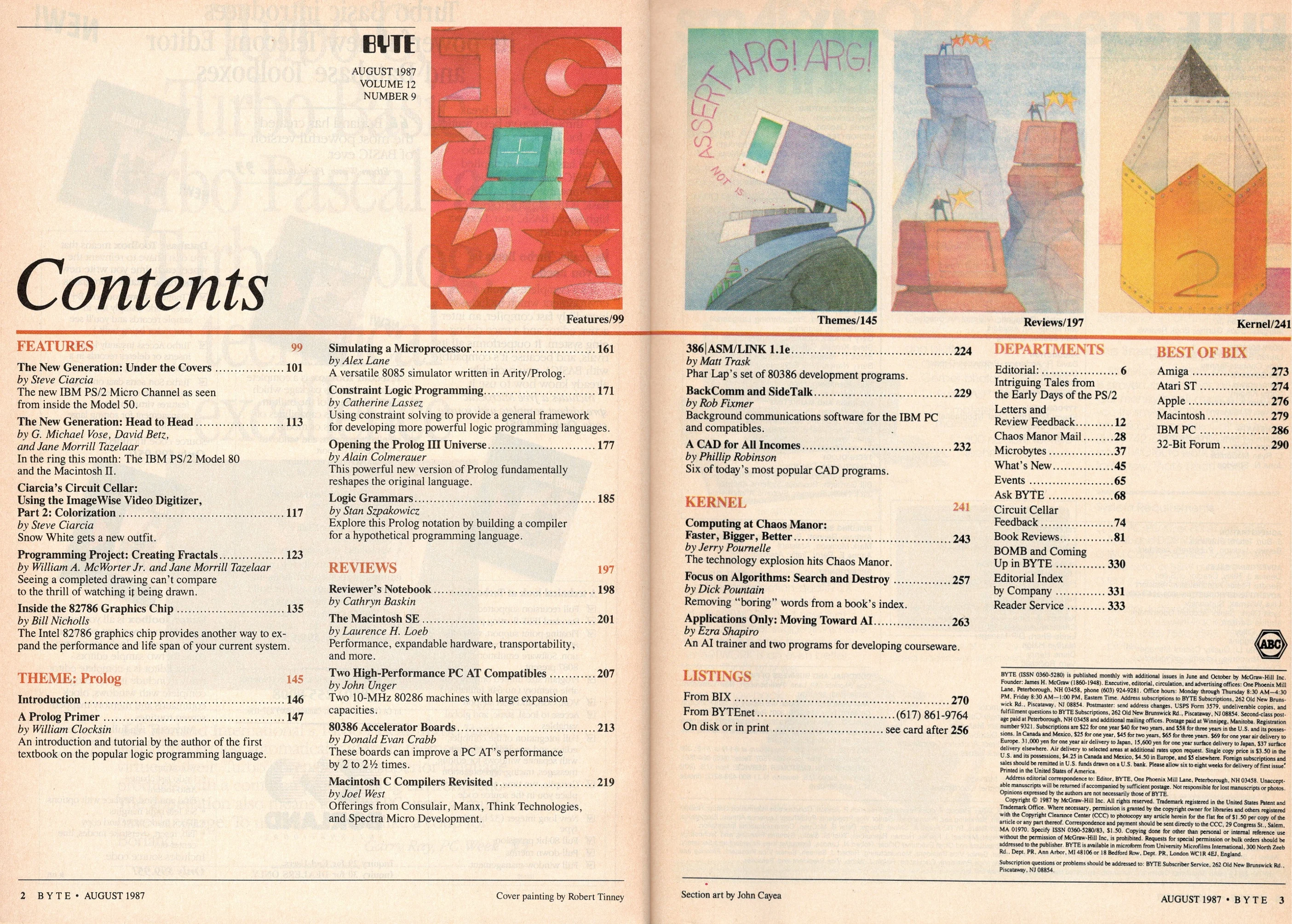
BYTE Magazine, August 1987. The market is trying to understand where IBM PS/2 fits and its future, so the issue is focussed on Micro Channel, the new bus architecture introduced with PS/2. The editorial will give you more insight. The extra snippet is from the Ask BYTE page. A guy is struggling with OCR on his Atari, and the ad is about running CP/M on your PC.

I'm trying to decide if the print format and everything that came with it (editors getting paid to put a lot of work in their articles) had actually higher quality density. Every time I browse BYTE's pages I try to think if I've seen such good technical (even low-level technical) content online, for years. And even if it were there, I don't think I'd read it on a screen...

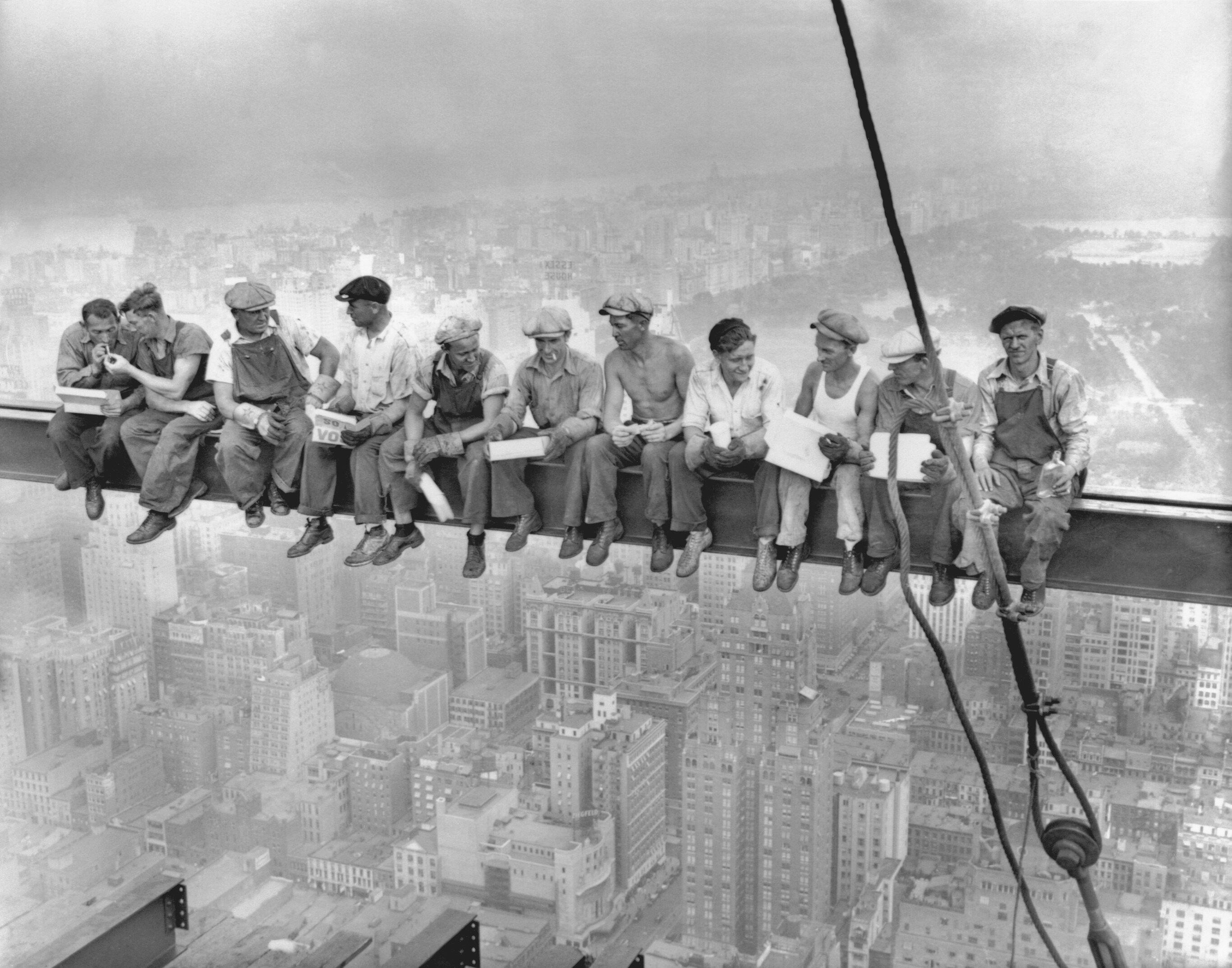
This is my iconic image of builders.

"Lunch atop a Skyscraper" is a black-and-white photograph taken on September 20, 1932, of eleven ironworkers sitting on a steel beam of the RCA Building, 850 feet (260 meters) above the ground during the construction of Rockefeller Center in Manhattan, New York City. It was arranged as a publicity stunt, part of a campaign promoting the skyscraper. https://en.wikipedia.org/wiki/Lunch_atop_a_Skyscraper