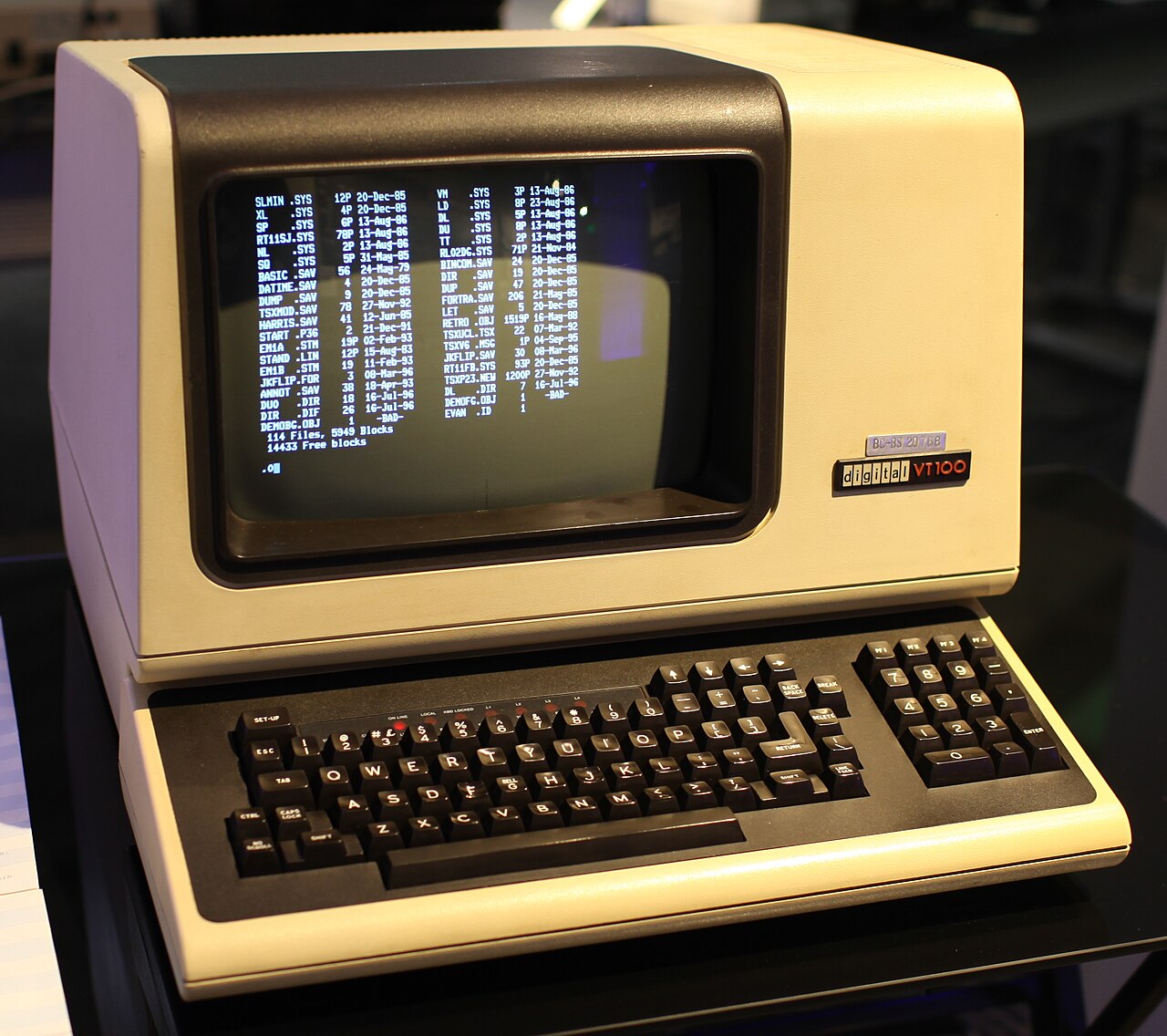
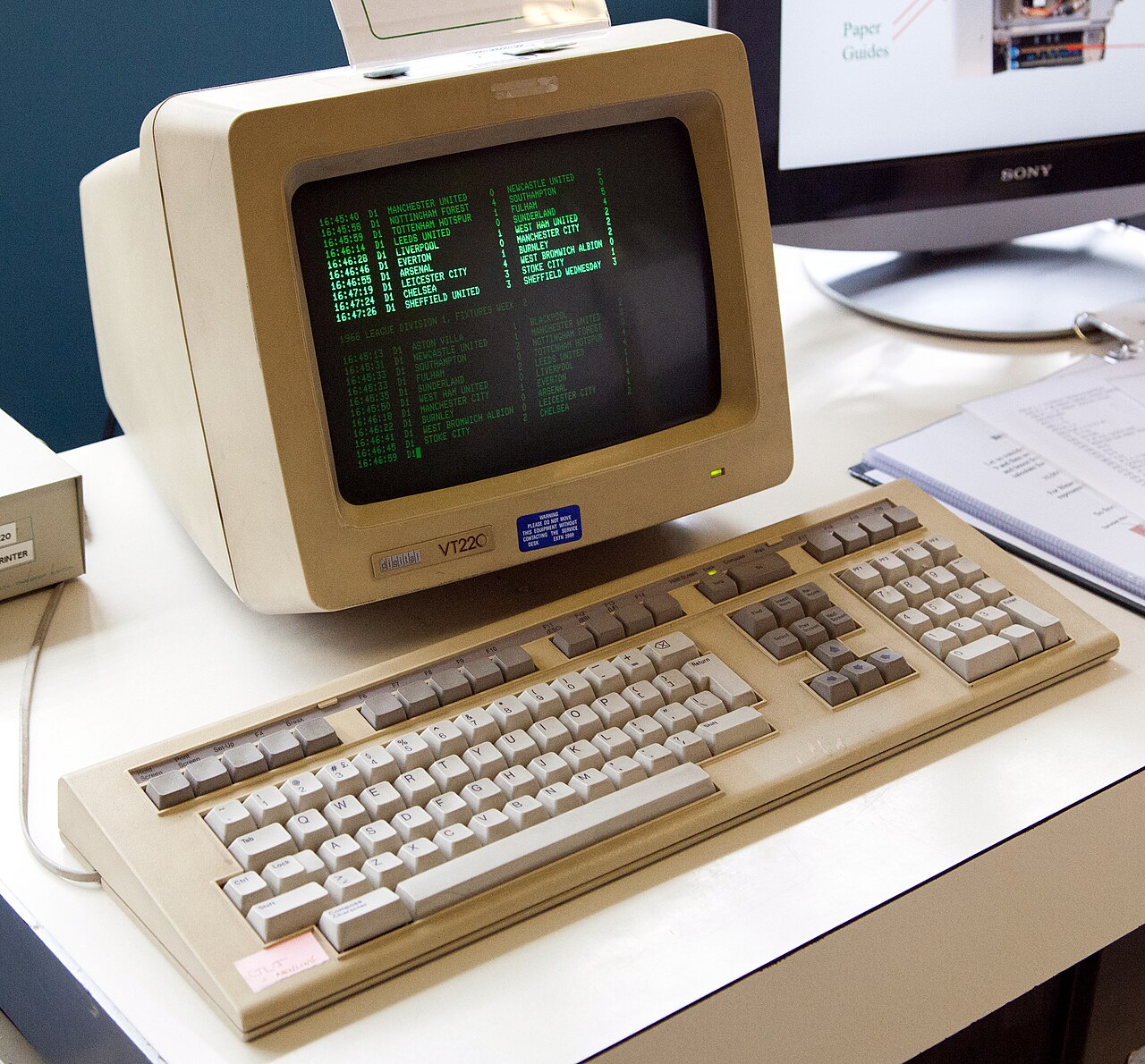
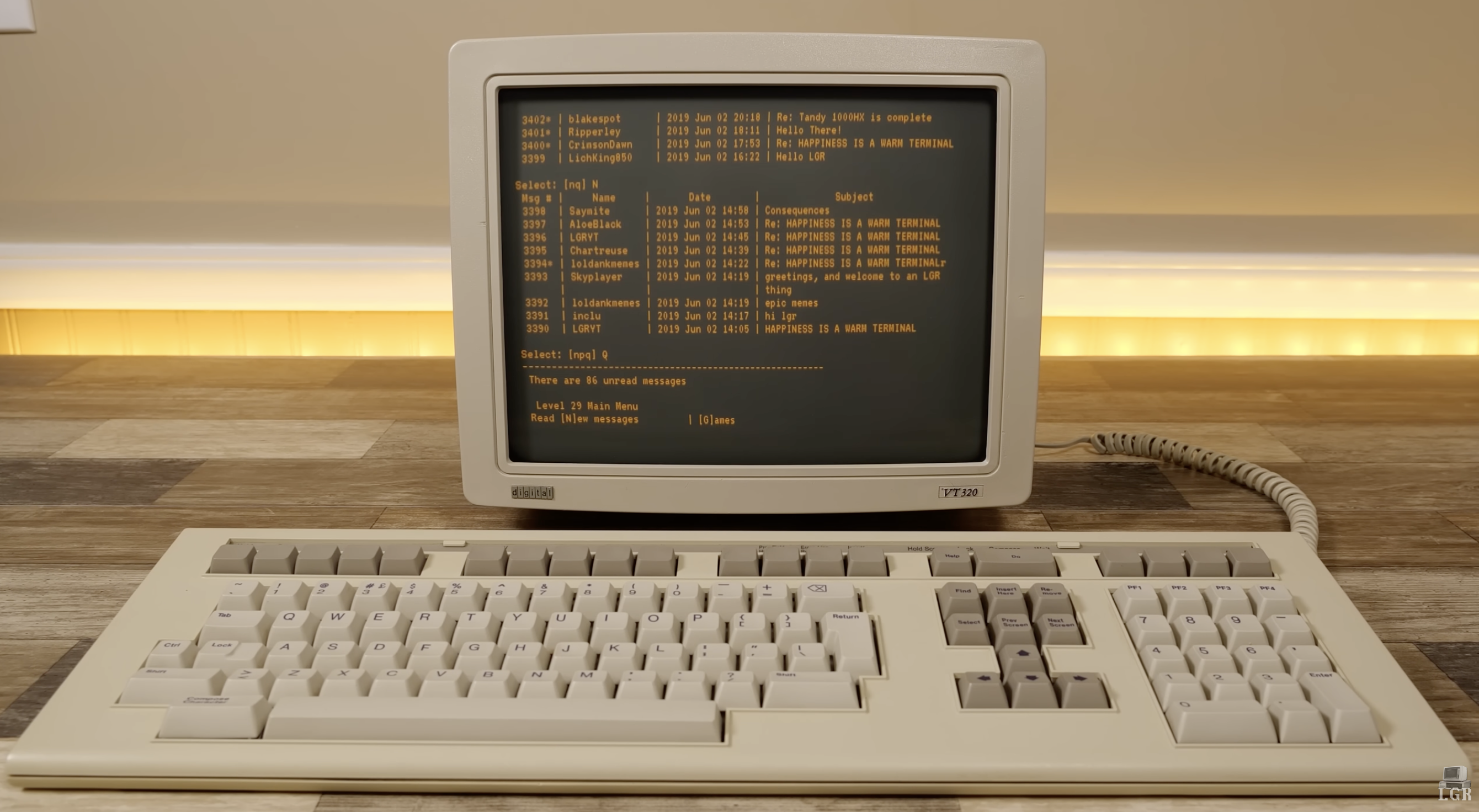
The VT102 (1978) and VT220 (1983) had the familiar 24-line terminal screen 1. This the reason your terminal defaults to 80×24, or 132×24. The VT320 (1987) kept a 24-line main display for compatibility, but added something extra: a 25th line at the bottom, reserved for status information.
That extra line could be hidden, used by the terminal itself, or made writable by the host. In its normal “indicator” mode, the terminal used it for local state: cursor position, printer status, modem status, and similar information. But in host-writable mode, software on the host side of the terminal connection could write directly to that line. 2
The two relevant control sequences are DECSSDT and DECSASD. 3
# Make the status line host-writable
printf '\e[2$~'

# Send subsequent output to the status line
printf '\e[1$}Build running…'

# Return subsequent output to the main display
printf '\e[0$}'
DECSSDT selects the status-display type:
CSI 0 $ ~   no status line
CSI 1 $ ~   indicator status line
CSI 2 $ ~   host-writable status line
DECSASD selects which display receives subsequent characters:
CSI 0 $ }   main display
CSI 1 $ }   status line
It's a surprisingly elegant primitive. A program could use it for progress, mode, host name, current job, debug state, deployment environment, or a persistent “you are in production” warning, without stealing a row from the application, rewriting the prompt, or relying on a terminal multiplexer.
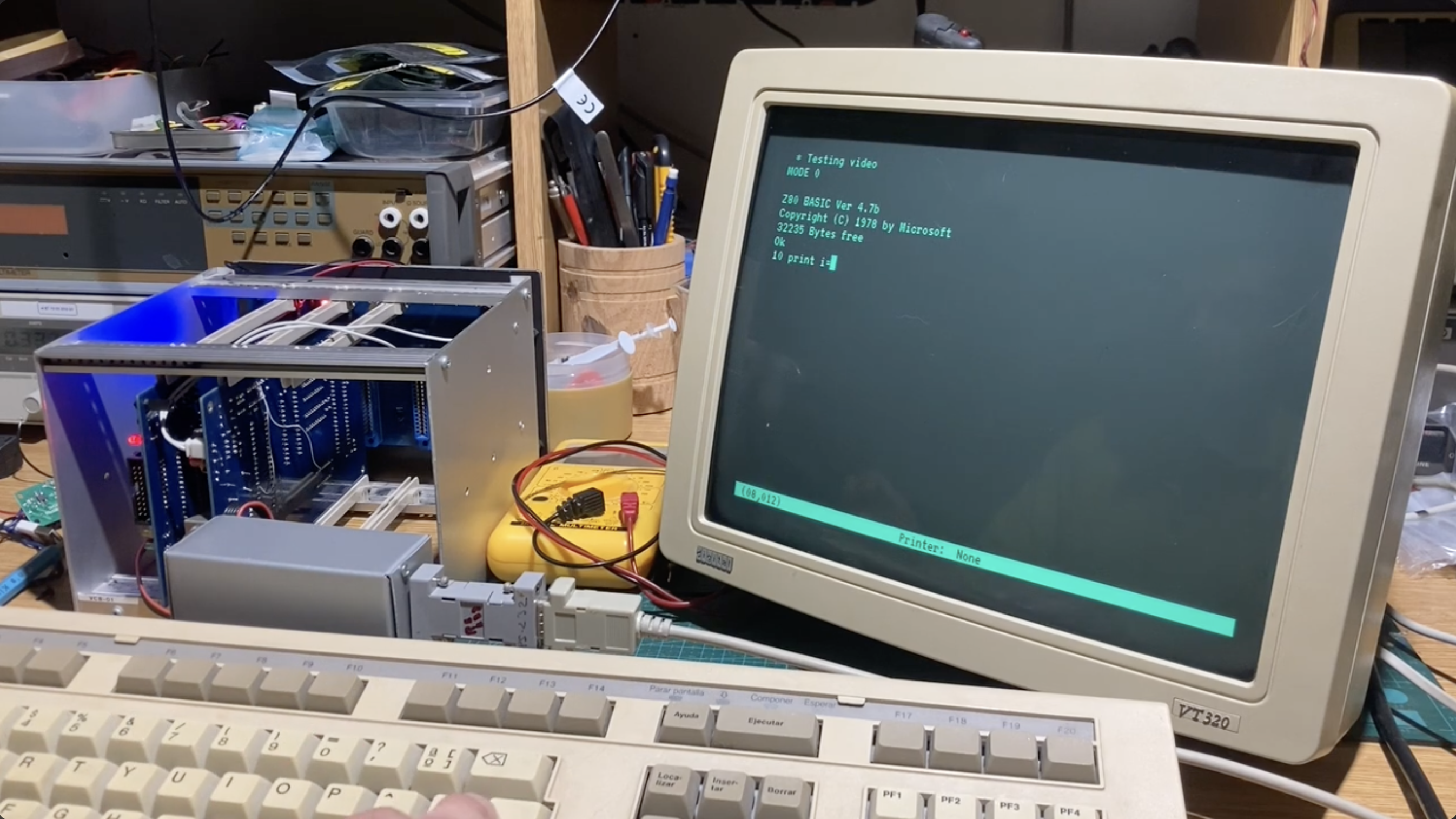
I wasn't able to find a good historical screenshot of a real application writing to the host status line, but you can see it displaying status info in this Capo's Tech video 4 5
Can we bring it back?
The idea feels familiar even if these particular CSI sequences are rarely supported today. We have reinvented the same feature in tmux status lines, Zellij bars, and prompt frameworks because the shape makes sense.
But those are all tool-specific solutions.
It would be great to see modern terminals support DECSSDT/DECSASD again. I think many apps like starship, build environments, package managers and so on would take advantage of the feature if terminal emulators supported it.
Image sources:
- Jason Scott: https://commons.wikimedia.org/w/index.php?curid=29457452
- Tom Page: https://commons.wikimedia.org/w/index.php?curid=98843032
- Capo’s Tech: https://youtu.be/EjJTog15Izs?si=aotLJ8Sb1QGcx2_H&t=426
- LGR: https://www.youtube.com/watch?v=RuZUPpmXfT0
-
Ken Shirriff has a great deep dive on this: IBM, sonic delay lines, and the history of the 80×24 display. ↩
-
The VT320 introduced a physical 25th line reserved for status use. Normally, the main display remained the familiar 24-line terminal area, preserving compatibility with VT100/VT220-era applications. Later VT420 documentation makes the behavior explicit: when the status line is disabled, that reserved line can become an additional user-window line for normal display data. ↩
-
If someone has a functioning VT320, VT330, VT340, or later DEC terminal and can capture better shots, I’d love to add them to the post. ↩