In 2024, Farcaster was the most decentralized it had ever been: a peer-to-peer network of hubs that were, at the protocol level, peers. My hub running on a Raspberry Pi at home, your hub on a VPS, Merkle’s hubs powering Warpcast, Neynar’s hubs powering various independent apps — they were all peers. Not equal, because network position, capacity, reliability, and importance mattered, but peers.
A year later, in spring 2025, Farcaster migrated to Snapchain.
Snapchain introduced globally ordered blocks, consensus, and, most importantly, higher throughput. Throughput was the weak point of the hub approach, and Snapchain fixed it in order to allow Farcaster to grow from tens of thousands of users to millions of users. But it sacrificed the one unique feature Farcaster had: decentralization.
The core team’s North Star was simple: grow 1000x or die. In pursuit of high growth, they introduced a number of additional client-side features: Frames and Mini Apps, wallets, and Sign in with Farcaster. What used to be a principle — that protocol changes should not be introduced unless a feature has matured — was forgotten, and protocol changes were introduced overnight to support things that looked attractive product-wise, like Farcaster Pro. Fees were reduced to practically zero, despite the original thesis that fees are the friction required to fight spam and abuse of network resources.
All these features made building alternative clients harder and harder, not to mention that the lines between “the protocol” and “clients” were blurred: Farcaster is not the protocol anymore; it’s the client.
These were good features. Fun to use and build for. But the expected growth never came, and all we are left with is a relatively small social network of nice and interesting people, operated by a company.
It’s a nice place to be, and it’s where I prefer to hang out, but it’s no longer something I’m passionate about. I wouldn’t wear a Farcaster T-shirt today. I wouldn’t try to recruit new users. I removed “I’m on Farcaster” from my X account.
Can we go back?
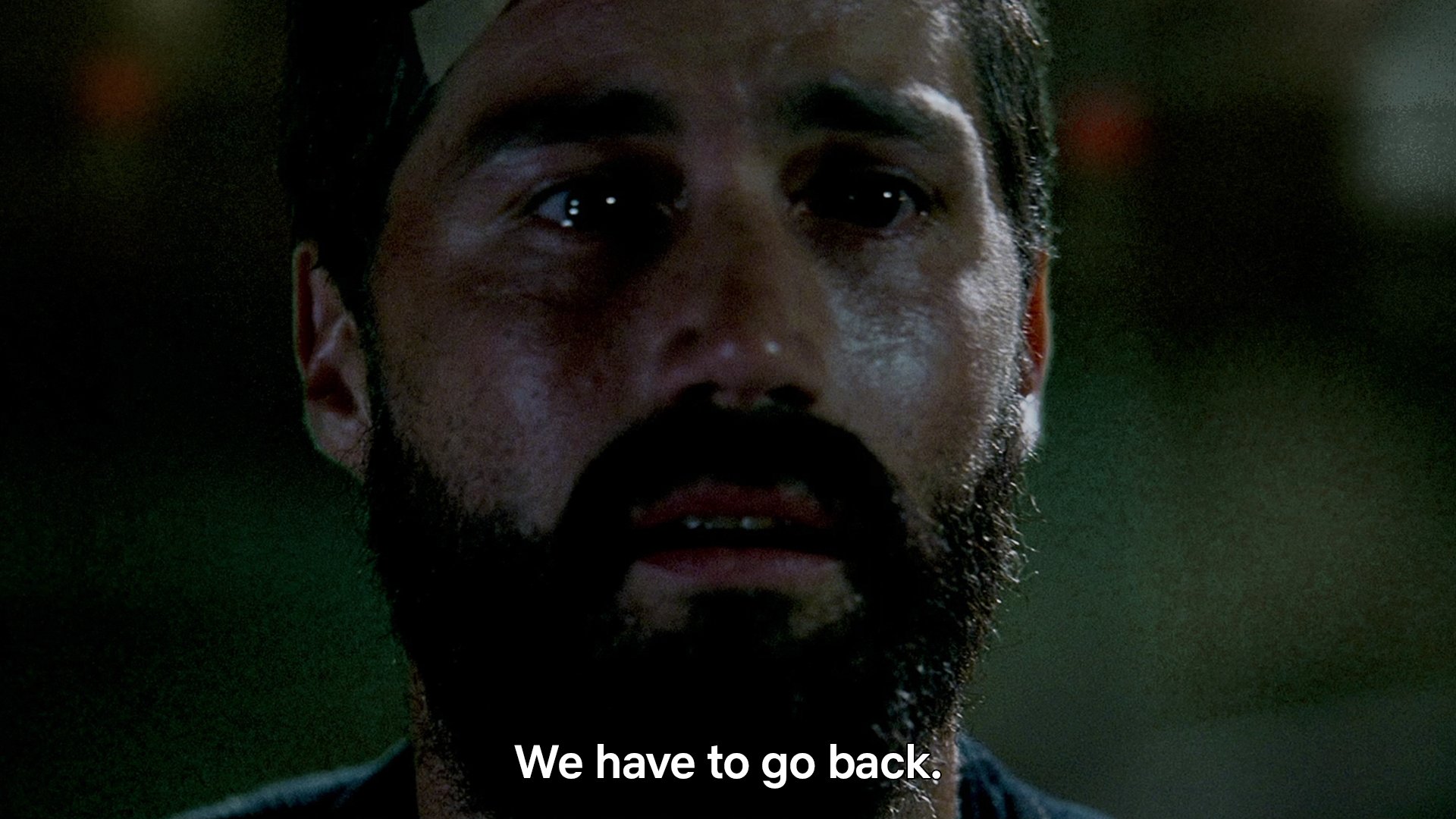
Which brings me to Jack Shephard’s words in the Lost Season 3 finale: We have to go back!
What if Farcaster went back to a hub-based architecture: simple, peer-to-peer, truly decentralized, where it’s easy to run a peer, easy to build self-hosted bots, and easy to build a client?
No bells and whistles. No Mini Apps. No assumption that every client must become a wallet, browser, app host, and social feed at the same time. Strip the network back down to the basics: identity, casts, replies, follows, reactions, and low data retention that makes home hosting feasible.
Then we can rethink Sign in with Farcaster, long-term archiving, scaling, storage fees, app embedding, and everything else. Maybe growth will come at some point in the future, maybe not, but as long as there are a handful of people running a hub at home, the network will be there.
This is not 2024. We know more now. We have seen what worked and what did not. We are not after 1000x growth at any cost. We have new tools for building software, especially when the protocols involved are simple. We can do better than the last time.
Personally, I would be very enthusiastic about this prospect.